Visiting Prague? Only have a few days?

Here’s the 5-minute guide:

Don’t bother renting a car unless you plan to travel out of town – just get a taxi ride in (about $35-$40 fixed rate to most hotels downtown).  Parking here is a bastard, and there’s plenty of public transport.  Plus, most stuff you’ll want to see in only four days is walkable.

Of course check out the Prague Castle and Old Town Square, and walk across Charles’ Bridge (you can start at either the castle or OT square and walk to the other in an hour or two, that walk will take you over the bridge).  There’s plenty of info on the castle and the bridge available, but when you’re walking around OT Square, remember the word “defenestration” – to be thrown out a window – it was a favorite method of killing rivals or dissidents back in the day, and a lot of people got that treatment there.  The big statue in the square, of the man with some followers – that’s Jan Hus (pronounced “Yan Hoos”), who was basically a Martin Luther type approximately a century before Martin Luther himself.  Was burned at the stake by the Catholic Church for his trouble.  The Astronomical Clock is also of course worth checking out – it’s been around for six hundred years, still runs.  Neat trivia legends:  after building the clock, the king had the architect’s eyes put out so he couldn’t go on to build another for someone else.

As I’m writing this, there seems to be a theme going on here ).  Hmm.

Wenceslas’ Square should also be on your list, though it’s not a square and once you’re there you’ll say “Okay, been there, now what?”  When you go there, make sure to get close enough to the big National Museum at the top that you can see the discolored patches on the columns out front.  Those patches are repairs done in 1968 after the Russian occupying forces shot up a big student protest.  The repairmen defied orders to make the colors match and made sure there would be a reminder there in protest.

Food-wise, Czech traditionals aren’t earth-shaking, but there’s one or two that are pretty good:  “svichkova” (I’m spelling that phonetically, you can just say that and they’ll know) is a loin of beef in a cream sauce, generally served with a few slices of bready dumplings.  (Where I’m from, dumplings are generally small and rounded, made by palming dough – here, they’re big logs of dough that get sliced before serving.)  Also, a “pork knee” sounds not so hot, but is really good if you’re into meat dishes.  Beef tartar here is also good, if you’re feeling adventurous.

Restaurants –

“La FInestra” is expensive, but arguably the best meat and fish selection in town.  Excellent pastas too.  Not fancy dress, but very stylish.  http://www.lafinestra.cz/cs/uvod/

“Jama Pub” has the best burgers in town, bar none – run by an American ex-pat who’s been here for nineteen years.  Good selection of local beers too.  A sister restaurant, Jama Steakhouse, serves up good traditional American steaks and sides.  Both Jamas are pretty low-key and relaxed.  http://www.expats.cz/prague/czech/tex-mex-prague/jama-prague/

“Ambiente” has several restaurants scattered around, all of which get good reviews – I’ve been to the Brazilian one around the corner from St. Nicholas’ cathedral in OT Square – reaaaalllly good.  http://www.ambi.cz/home.php

“Terasa U Zlate studne” – fairly expensive for Prague, but the view can’t be beat.  Stop in here one evening for drinks or dinner.  It’s snug up against the castle, so although you won’t see the castle itself much in the view, you’ll get most/all the rest of Prague.  http://www.terasauzlatestudne.cz

Hergetova cihelna – Czech style restaurant, next door to Franz Kafka museum, really good food, medium-expensive, great view across the river.  It’s part of the “Kampa Group”, of which there are quite a few restaurants in town.  http://www.kampagroup.com/en/index.php  “Cowboys” is also a Kampa restaurant very near the Terasa U Zlate studne – Texas-style steakhouse with an equally good or arguably better view.

Other things to do:

Go to an Absyntherie (there’s one next door to the Ambiente mentioned ^^, and one or two others within walking distance – have an absynthe “Bohemian Style”.  Quite good, very neat atmosphere, and it’s fun to watch the ritual they go through making it.

Vyserhad – this used to be a separate town, kept apart from Prague by a big natural canyon.  There’s a bridge there now, and easy access by metro or car (though parking is next to impossible).  Big cathedral, really interesting graveyard – you can easily lose 3-5 hours here.

If you like beer, have a beer at a local pub – and make it Pilsner Urquell.  You’re 40km from where lager was arguably invented, and this was one of the first.  On draught it tastes pretty dramatically different from the bottles back in the US.  Good place for that is down the street from OT Square, on the corner of Valentinska and Kaprova, at Ristorante Parlimento.  That’s also a good place to take a break if you’ve been walking around a lot.

The Old Jewish Cemetery – pretty neat, tour guides all mention it.  This is where the clay golem legend originated, it’s said an old rabbi (can’t remember his name) made it to protect the community.  In the same few blocks around the Cemetery are some of the same areas Franz Kafka used to live and hang out, so if you stop for coffee along the way, just watch the streets and ponder ).

Just walk around Old Town and appreciate the architecture, browse the antique stores, stop in at a local hole for a beer or a coffee, whatever.  Soak in the fact that you’re walking in a city that’s been around since before there were mechanically-printed books.

Posted in Uncategorized | 1 Comment

Salmon Glaze

My wife loves this, and she just had me print it up for her mom, so I figured I might as well share:

Salmon Glaze (use with .75-1.25 kg salmon filet)

In a 150ml cup, put in:

1 teaspoon of ground or crushed black pepper

1/2 teaspoon  fine-ground salt

2 teaspoons dried garlic powder

2 teaspoons onion powder or onion flakes

1 tablespoon butter

Juice from 1/2 medium lemon (include any pulp if you like)

3 tablespoons honey (more won’t hurt, so let them be overloaded if you like)

fill to the top with water


Microwave the mix on high for 30 sec or until it starts to boil.  Remove from microwave and stir to mix thoroughly

On a small baking pan, spread a smooth sheet of tin foil.  Grease with olive oil or butter.

Rinse off the salmon filet, and lay it skin-side down on the greased foil.

Spoon the first 1/3 of the mix onto the salmon, trying to ensure that all the exposed meat receives at least a little of the liquid.  The solids in the mix should also end up on the salmon.

Bake at 180 C for 10-15 minutes, or until the mix that has gathered in the pan has begun to bubble happily.

Spoon another 1/3 of the mix onto the salmon, same as the first time.  Return the salmon to the oven.

Bake another 10-15 minutes, or again until the mix is bubbling well.

Spoon on the last 1/3, return salmon to oven until mix is again bubbling.

As the baking goes on, the mix will reduce and get darker.  Using a spoon, take up the mix from the pan and re-apply to the fish occasionally, until the mix becomes a medium brown color.  At this point the fish should be cooked all the way through and should be ready to serve.

Cut fish into serving sizes and place on plate, taking one final spoonful of the brown mix from the pan and pouring it across the serving.

Posted in Cooking | Leave a comment

Review: “Star Wars: The Old Republic”

Gameplay (entirely subjective – how much fun did I have?  Would I play this again?):  5.0

Visuals (graphics quality, atmosphere, realism):  7.0

Audio (includes sountrack, effects, etc.): 7.0

Storyline (writing, pure and simple):  5.0

Delivery (packaging, contents, what you get): 3.0

Technical (Did it install?  Did I have to answer a zillion questions?  Did it break my machine?  Time from opening box to play?):  7.0

Overall:  6.67

Executive Summary:  save your money for Guild Wars 2.  This is 2012, and these dumb pricks spent half a billion dollars to produce a 2008 WoW clone with Star-Warsiness in it.  Your money can be better spent elsewhere.

Okay, it’s “Star Warsy”, it’s a space MMO, lots of shootey-shootey, and the first time you run a character through its storyline, you’re going to have fun.  That’ll take you about three to six weeks.

It’s pretty at first.  Until you realize that this is 2012 and graphics can achieve MUCH more than what you see.  Then you go looking at the graphics options to crank up the detail because you have a reasonable video card, and you realize this is as good as it’s going to get.  Apparently in beta it had really, really good graphics, but they were removed in order to reduce the size of the game’s footprint from 45GB to 12GB.

That leads me to another point:  packaging.  I bought this as a digital download.  I am also a software developer and manager of same.  I can say with authority that if this had been structured right, it could have been playable at about 4GB downloaded.  Instead it forced me to pull down all 12-13 before I could play.  Probably not a big deal for folks on a 50 megabit connection – but I’m on wireless, 4 megabit.  That download took me all day.  Frustrating.

Back to graphics:  hint to you, Bioware.  You’re running an online game.  Any system capable of running it is capable of running a threaded program.  You might have considered leaving the 45GB footprint as part of your online available files, and downloading them over a throttled connection on a background thread so that the graphics experience would improve gradually as a person played the game.  45GB is shit to me.  I have two terabytes inside my computer, and a swappable ESATA drive that gives me an unlimited supply of more.  Footprint is not a factor.  With a quick question, you could offer someone “Would you like to background-download additional graphics files of size XXGB?  (You have YYGB available on C:\ and ZZGB available on D:\)”

You’ve been at this game thing for over a decade.  That kind of novice thinking says a lot about your management.

Back to the game.

It’s fun at first.  Until you get tired of missions/quests that say “Kill 10 of this” or “Retrieve 25 of that, and you have to kill those to loot them.”  Which will probably happen in about a day.

The mobs change shape, which is a plus.  There are different ones on different worlds (a few get re-used, that’s true).  This is a HUGE step above WoW, where every world had a wild boar (some had spikes!), every world had a big rock elemental, every world had a flying bat, and that sort of bullshit.  But in the end, they’re all mobs.  They are ranged, they are melee, whatever.

As I mentioned before, you’ll enjoy the trip from level 1 to level 50 the first time.  (Further characters will strain your patience, though, because although the story line will be different, you have to visit the same places, see the same crap, and do many of the same grind missions to advance that you did with your first character.)  Once you get to 50 though, the same question will come up that did for me:

“Is that it?”

With the exception of some team events (of which there are about twelve – three of 8- or 16-person strength, and about eight or nine 4-person), sorry, yes.

Have you played an MMO before?  Was it WoW?  Did you leave WoW because you were tired of it and wanted something new?  Don’t do SWTOR.  Why not?  Because this game  IS WoW.  Just in space.  With Jawas.  The roles are the same, many of the classes are similar, and even the powers are blatant thefts from WoW.

Shooting things with a blaster is fun.  Taking a lightsaber to a bad guy (or a good guy) is fun.  Until you realize “Hey, this is some kind of future where I have small arms that should probably pack more power in them than is contained in the electrical grid of a small 20th-century city.  WHY DIDN’T THAT ANIMAL I JUST SHOT/SLICED SIMPLY DIE?” I understand for the sake of game balance and game play they have to make things not so realistic.  But they even break Star Wars styles – in the films, a lightsaber chews through droids like they were made of paper.  Blasters blast things.  In the game, it’s an ablative damage cycle, just like every other game.  Attack X does damage Y, which deducts hit points from Mob Z.  It’s a race to see whether Mob or you gets to zero first.

Is it too much to ask that in 2012, someone will have come up with an MMO that treats things differently?  For instance, degrading performance?  If I’m close to dead, I’m either going to go berzerk in a final blast of effort, or I’m too wounded to put up much of a fight.  How about something reflecting a different equation than just “subtract from hit points”?  Why am I waving a magic lightsaber around and I’m not able to cut through trees, walls, fenceposts, at will?  And how about giving me limited ammunition or charge?  At least force me to change the D-cells in my flashlight or something.

Companion characters – NPCs you pick up along your storyline that come along with you when you don’t have any live people who want to join you.  These are pretty cool, nice ideas, and each one has a slightly different attitude.  They actually help if you (like I do) play at off hours and have a hard time finding people to group with, or if you simply prefer (like I sometimes do) to do things solo.  I don’t actually have anything bad to say about this idea, I think it’s a good one.

Crafting skills – these are ultimately pointless in the small universe you play in, because everyone learns one, everyone skills it up, and then EVERYONE SELLS THE SAME STUFF.  It becomes a commodity-seller’s market.  Since gear never wears out and you never lose any to in-game destruction (as occurs in Eve, for example), once someone buys somthing, it’s bought.  The only real economy here is in consumables like health packs or stims, and there’s no distinction aside from price on who you buy it from.  As well, there’s no localized market – everyone goes to one central hub of eight (yes, you read that right, only eight) terminals to buy and sell.  This is one of the shittier aspects of the game.

PvP:  I’m not much of a PvPer, and have enjoyed a few of the PvP fields I was on, but apparently these are as limited as the PvE endgame content – there are only a very few fields, and it uses a “valor” system of awards that was old when this game first went into development.  Hard-core PvP players I’ve spoken to have little to speak of in favor of this game.

The recent addition of a “Legacy” system (which gives you an excuse to find a relation between all of your various characters), while neat, sends a very clear message:  “Hey, we here at BioWare/EA can’t really think of anything new content-wise, so here’s this great system we spent a great deal of time on that will help you gear up your twinks.”

It’s also got a major strike against it:  it’s an Electronic Arts company.  BioWare put out some good titles back in the day, but not any more.  EA is where good game companies go to die.  And BioWare appears to be no exception to that rule, if Dragon Age 2 and Star Wars: The Old Republic are any indication.

I could go on, but in short:  it had a lot of promise, and lived up to almost none of it.  Like most other games in the Star Wars franchise, this turned out to be the usual Beauty Contest Winner:  pretty to look at, but once you get to know it, ultimately disappointing.


Posted in Uncategorized | Leave a comment

KPIs Part II – As Applied to a Technical Support department

This is Part 2 of a series – Part 1 can be found here

So…part 2 of this series will take a look at the KPIs appropriate for a Technical Support department.  In order to arrive at what elements of performance are both measurable and key to the department, we have to investigate what the role of a Tech Support department is.  I posit that the role of Technical Support is this:

To be the first layer of customer care, responding to and assisting the customer with issues surrounding the use of the product or service offered by the company.

What this means is that when the customer isn’t yet a customer, when they’re just a prospect, the first person(s) they encounter are the salespeople.  It is at that point up to the salesperson to put the company’s best foot forward and present the product in its best light as a solution to the appropriate needs or desires of the customer.  Once they are a customer, if any problem is experienced with the product of a technical nature, TS is the first line of assistance – often the only one.  It is often the only contact the customer has with the company, outside of mass-market advertising.

Knowing this about the role this department plays, let’s go back to the question of what is a KPI – a Key Performance Indicator.

What is Key about this department?  What is the reason it exists?  I will submit that the answer to this is that it helps customers use the company’s products successfully.  As well, it maintains a healthy customer relationship.  Some might argue that its cost is key – but cost is not correlated to success:  cost could be high or low, but does that impact how well it accomplishes its job?  Cost is important, and absolutely should be tracked and measured, but it is not key.

Let’s start with “helping a customer use the company’s products successfully,” and turn that into metrics, something we can measure.  I’m going to work backwards here – successfully sticks out in this sentence as a major point.  That means to me that we come up with a measure of successful resolutions to customer issues.  Either workarounds or fixes, as long as the customer has an answer and considers the issue resolved, that’s a successful resolution.  So immediately there’s a metric:

  • The ratio of successful resolutions against total issue count

I submit that that is Key, it directly reports Performance, and it is a measurable Indicator.

Next I want to tap that other role – “maintains a healthy customer relationship.”  Healthy in business terms generally means that the customer will speak well of the company to others, and will be comfortable with the idea of spending money with the company when the need arises.  This one is harder to measure, and some companies might not do it, but the way to measure this is to ask the customer periodically, or immediately after the resolution of the service episode.  Probably a small fraction of customers will reply to a request for such an evaluation, so keep the questions short and don’t spend a lot of the customer’s time.  It may also be worthwhile to offer some form of incentive to respondents (think small: a $5 coupon at Amazon, or a free song download from iTunes, something unrelated to the company’s products – you’re wanting answers from dissatisfied customers as well as satisfied ones, so they may not give a hoot about discounts on your products).

The question you’re trying to answer is:  would you, the customer, be comfortable doing business with us, the company, if your need should arise again; and would you be comfortable recommending us to a friend or colleague experiencing that same need?  I’ll distill this to a more recognizable term that almost everyone will recognize:

  • The ratio of satisfied customers among total customers experiencing issues

That is a quality that is Key, it directly reports Performance, and it is a measurable Indicator.

I’ll hit some other points here which are also extremely important, and perhaps to some businesses can be considered key (for example, if you run a company or department that handles outsourced tech support calls and you’ve got three hundred staffers manning a phone bank, some of these will definitely be key).

  • Numer of Issues Awaiting Resolution

This is usually referred to as “Calls in Queue”, but I’m trying to future-proof my writing here ).  This represents the absolute number of issues that are in queue awaiting their first contact with a member of your team.  The medium could be anything – telephone, live chat, email, snail-mail, whatever.  This is a measurable indicator telling you what your backlog is.  It will also be used to give you data points of absolute count of issues per product over time (which, if the foundation of the product is relatively sound, you would expect to see go down over time).  As well, the ratio of this number against 1st-tier support staff will indicate whether staffing levels are appropriate for the volume and duration of issues (too many issues indicates understaffing, too few indicates overstaffing).

  • Wait time in Queue

This will differ for each medium, so it’s not easily measured – it won’t be key unless your department is responsible for only one method of input.  It is important though.  It represents the amount of time between the arrival of the customer’s issue and the moment when it comes in contact with a 1st-tier staff member.  Combined with number of issues in queue, it gives you an indicator of whether your staffing levels are appropriate for the volume of issues.  It directly impacts one of the two KPIs I mentioned above, because the amount of time between arrival and contact affects the customer relationship.

  • Issue Duration

This represents how long it takes from either arrival of the issue or its first contact, to the point where the issue is resolved and the customer receives the resolution.  (I specifically say “receives,” rather than “accepts,” because it should be recognized that some customers simply never accept resolution outside of unreasonable circumstances.)  Where the number of issues and the issue wait time are something of a balancing act with staffing and you will have upper and lower boundaries which you know should not be crossed (and those boundaries will shift regularly or be different for each product), this is a one-way metric:  the shorter the better.  A certain level of “acceptable” should be established, which will only rarely be changed (as new techniques of resolution are adopted, for example).  This measurement indicates how capable your team is at providing the service that is their charter.  If things take too long, your staff need training.  There isn’t any such thing as too short – though you should keep an eye on short and verify that resolution is genuine, and not staffers closing down issues in an illegitimate manner.

Other factors that can be measured for valuable data – but which are not necessarily indicative of departmental health – would include:

  • Issue aging – addressing “cold case” issues, ones that have not had successful resolution and remain open a long time
    • If issues derive directly from product defects, a really good team would tie their issues to specific feature- or change-requests in the product.  When the product changes in such a way that these issues are resolved, having a message sent to those customers indicating the fix would be excellent customer service.
    • Product-specific issue counts – these can be given to product management for determination of whether development time should be spent on fixes or features; they can also be used to measure the overall quality of a product.
    • Ratio of escalated issues among total issue count – what % of issues require attention beyond first tier or knowledgebase?  This can be used to indicate whether 1st-tier staff need training, or on an individual level can indicate when a staff member is suitable for promotion.

So that’s my two bits on tech support – I’ll do another article on general IT later (this time I won’t promise in a few days though, since things are a bit distracting right now).

I’d appreciate your thoughts on the matter!

Posted in Business, IT, Work | 1 Comment

Battle-Bands: table-less / mapless D&D 4e

With the oncoming death of the VT (actually, this was spurred because while insanely useful, the VT made mapmaking a HUGE pain in the ass), I was spurred to create a “mapless” battle plotter for D&D 4th Edition.  The rules below are a first stab at such a system.  All powers and ranges, etc. are handled normally, with the abstractions listed below.

Unless specified otherwise, In this description below, any rounding is done with .50 or lower rounding down, .51 or higher rounding up.


Bands:

Bands are indeterminate distances, generally considered about 10 spaces across.  When an encounter is defined, the number of bands is decided (and may be undefined).  Generally the two “outermost” bands are considered “in the middle distance” and are in sight of the combat, but are disengagement territory – to move off the bands is to remove oneself from the encounter.

Within a Band:

* The band # you’re in confines you to melee combat with other creatures in that band only

* range 5 powers reach target(s) in your current band and those two adjacent bands at the time the power is used

* range 10 powers reach target(s) in your current band and up to two bands away

* range 20 powers reach target(s) in your current band and up to four bands away

* even with altitude, you’re still in a band – range to altitude creatures is altitude within your band, altitude + 3*(the difference in bands) for those outside your band

Movement:

* to move between bands, use a move action roll your current speed (which might be more than normal if you expended a power, or less if you are slowed or immobilized) or less on a d6 to move one band up or down the scale.

* a non-shift move action or ranged attack in your band will provoke OA from whatever enemy/enemies are currently adjacent


Push and Pull:

Push and Pull powers and effects can be used to pull creatures from another band into the caster’s band, or may shove creatures from the caster’s band into an adjacent band, just as if the caster were using a move action – the caster rolls a d6, and if the total is equal to or less than the total length of the push/pull, the desired shift in bands occurs (if a pull, the caster may pull the creature affected adjacent if (s)he desires it).


Adjacent:

Without shifting as given above, you are considered adjacent to 20% or at minimum 1 enemies in your band (random) at any given time, rounded.

You may expend 1 move action to be adjacent to a specific creature in your band.  This does not provoke OA.

You may expend 1 move action to become adjacent to 10-40% (d4 * 10, round down) of remaining enemies in the band.

You are considered to always be adjacent to 20% (round down, minimum 1) allies in the same band without expending any movement points.

You may expend a move action as a shift to remove yourself from adjacency to a number of creatures equal to or less than your shifting speed.


Burst and Blast Powers:

A close-burst power will always catch every creature adjacent to you as part of the affected group.

The affected group of a close-burst-2 will add 10-20% of creatures in the band (random, round down) in addition to those adjacent to you.

A close-burst-3 will add 30-60% of creatures in the band (random, round down) in addition to those adjacent to you.

A close-burst-4 or higher will add 70-90% of creatures in the band (random, round down) in addition to those adjacent to you.

A burst attack that is not “close-burst” may be designated to be centered on (a) a creature, or (b) a space.  If a creature, treat the burst using the same rules as the close-burst above, centering on the creature in question.  If a space, treat the space as if it were a creature using adjacency rules above and apply the same rules as close-burst powers above.

A blast attack will catch 10-30% (d6/2 * 10) of all adjacent creatures (caster’s choice of which ones, rounded), and will catch additional creatures as given above under close-burst attacks – but may not target any additional adjacent creatures.  Adjacent creatures not eligible for targeting are counted among those that do not fall into the affected group.  Allies adjacent to targets (but who are not already among the randomly-determined affected) that fall into the blast may be included or excluded from the affected group at the caster’s choice.


Zones:

Zone powers are treated the same as burst powers when they are laid down.  Any creature in a zone may roll to escape the zone if it chooses to.  The required roll must be greater than the zone size (as defined by its size in the power with any inherent modifications due to feats, equipment, what-have-you) minus the creature’s current speed on a d6.  For example:

Joe throws a burst-3 zone over a speed-6 hobgoblin.  Size 3, minus speed 6, results in a total of -3.  If the hobgoblin chooses to escape the zone by spending a move action, it can do so automatically. 

However, if Joe’s zone includes a Slow effect, that reduces the hobgoblin’s speed to 2, which means it has to roll higher than a 1 in order to escape.  If the hobgoblin were somehow immobilized, it would have no move action and could therefore not escape this turn. 

The DM may insert conditions that make the roll more difficult as (s)he deems appropriate.


Moving Zones:

Many zones include a movement rider if the caster spends a move action or commits some other activity.  In those cases where the caster may move a zone, the caster may choose to try to add creatures to the zone’s area of effect (in which case, expending action to have the zone engulf creatures), or may attempt to move the zone into an adjacent band.

Engulfment:  the caster may attempt to add a number of creatures to the zone’s effect no greater than the zone’s size plus 1 (add one creature for a burst-1 zone, two for burst-2, etc.).  The caster rolls a dX, where X is the number of spaces the zone is able to move.  The resulting roll determines the maximum number of creatures that may be added (not to exceed the limit established by the zone’s size).  Any creatures already in the zone remain under its effect.  The creature(s) so affected are determined randomly, unless the caster chooses IN ADVANCE to reduce the roll by 1, in which case allies of the caster are excluded.

Changing Bands:  the caster may attempt to shift the zone into another band by rolling the total movement of the zone this turn or less on a d6.  If successful, the caster may change the zone’s band and may then attempt an Engulfment (as above) on creatures in this band.


So as a DM you’d allocate forces, describe the terrain, and maybe decide how many bands wide it would be – few for tight spaces, lots for wide-opens.  I figure average would be about seven.  If players are calling for cover or using terrain in their description of how they want to act, the DM imposes difficult terrain penalties etc. per judgment call.  A sample band set might look like this:


Band 1:  cornfield, 4′ high, not difficult terrain but possible cover (full cover for creatures under 4′)

Band 2:  grassy lawn, open area

Band 3:  burnt down farmhouse, difficult terrain, some cover available

Band 4:  grassy lawn, some burnt bodies, open area

Band 5:  burnt down barn, difficult terrain, no cover available

Band 6:  partially-burnt cornfield, cover available but only if asked for

Band 7:  dirt wagon-road, open


Players start in band 7, what do you do?

Much of the combat would then be descriptive, range combat could still be shielded by gaurdians, because a double move would bring you two bands to go face-to-face as needed, etc.  I’m working on some rules for pulls/pushes in case you want to keep the target in your band, etc., and how to wrangle large squads of adjacents (for when you want to throw around really big #s of minions).


Thoughts?

Posted in D&D, Games | Leave a comment

Problems in Retail

I was asked recently (during an interview) what my view of the retail world was – as an open-ended question and not focused on the aspects of how to use technology to provide a solution, I stumbled over it.  It was playing at the back of my mind, and I realized why I stumbled – the question wasn’t centered on the solution, it was a general view of what’s happening in the retail space.

Some who know me may remember that I tend to view things from a perspective of biology (blame it on my university degree, but regardless of source, it’s still true).  The current consumer climate is very much an ecology – but where a biological ecology is driven by energy (in the form of solar, captured by plants and exploited in a long chain of herbivore-carnivore relationships), our economy is an ecology driven by money (generated by work applied to raw materials, modified by value instilled through psychology).  I’m going to refer to the driver in this context as “fuel” – whether it’s energy or money, it is the fuel on which the respective ecology runs.

Any ecology is driven by the flow of its fuel among the constituent living creatures in it.  From sun to plant, plant to animal (or for you nit-pickers out there, fungi or other plants), and them among animals and even in the recycling of waste materials, fuel in a system drives its movement.

In the case of the retail environment, the flow of fuel has been dramatically cut back at the base of the food chain – the consumer.  Enormous and sustained job losses, cutbacks on welfare programs, and the outright theft of retirement funds by institutionalized fraud have stopped a large amount of the flow of fuel into the system.  This has produced, not surprisingly, a drought that is being felt up the food chain – consumers aren’t buying with the same cash they used to.

As a result, retailers are finding their revenues shrinking, in some cases with alarming rapidity.

Unfortunately, those same retailers can’t change anything in the system (unless they want to spend some money buying a few politicians with the idea of introducing more money into the system instead of shielding CEO wages for a change).  So they have to do what animals do in such a situation – adapt, and do better what they do than the others in the same space.

In the case of a retailer, that means communicating the value of the products they offer more effectively.  In the end, that’s really all a retailer does:  communicate the nature of and deliver their products.  Of course they also sell those products, and provide showcases for them, but the value they really add to the product is their ability to communicate and deliver to the customer.  Their manufacturers already sell, and if pressed will enter the distribution business – there are more than a few manufacturers who sell direct.  It is in the communication arena where retailers provide value.

Specifically, the communication needed is to give the consumer of the product the knowledge (or the long-term perception of knowledge) that he or she is making the best-informed choice for the expenditure of his or her money, and to do so in a way that the consumer associates the knowledge provider with a sense of trust.

To delve a little into the psychology of selling, a customer can have all the perfect intellectual knowledge and confidence in the world, but when dragging out the wallet, the brain kicks into something akin to the “fight-or-flight” emotional state.  All that confidence gets shaken when money’s on the table.

Having built up a trusting relationship, a seller can take the edge off that fear and provide a more comfortable/secure environment for the consumer.   That translates into a higher number of customers being comfortable enough to lay down their cash.  (I am not stating that this relationship is justified in this context – just that it exists.  I always advocate honesty in such dealings, because while establishing a false trust might score you a few wins up front, long term it’s a failing proposition.)

So what does this mean from a pragmatic standpoint to the retailer?  It means retailers have to step up to the bat and really hammer home their product knowledge, and their ability to interview the customer and get a solid grasp of their needs.  Mating the absolute best product to the customer’s need, and being able to walk the customer through that process so they participate in the decision is really the key to the whole thing.  In a lot of ways, our product at PrismaStar was designed to facilitate this process, but unfortunately it was still not ready to be sold to a large audience.  Had I had another eighteen months of hard dev work with a good team of six to ten, I think we’d have been mass-market capable, but that’s just not how things went.

So on a technology basis, what does this mean?  A couple things:

  • Analytics:  retailers need good, reliable metrics to evaluate their results (A/B testing, customer reviews and interviews, etc.).  If they don’t have an analyst on staff already, they need to contract one independently or from a third party.  Without this, any changes made to their methods of selling will be little more than shooting in the dark and hoping to hit something.  Analytics also provides the ability to have predictable stock on hand, pricing needed to wipe out existing stock, and increase turnover counts.
  • Information:  absolutely top-notch, high-quality and pertinent product data in a language that their customer will understand and relate to, provided in several different formats (video, text, blog postings, customer reviews, images) to catch the various types of cognitive readers.  This information has to be VISIBLE and easily accessed – which includes making it easy to find info on the product the customer might come looking for.  At MidwayUSA, that company took pride in often knowing the details of the products better than the manufacturers of the products did.  That’s the kind of product knowledge needed.
  • Tools:  good selling tools.  This means the website, product search, the shopping cart, the payment system, delivery to the customer, they all have to be as free-flowing and seamless as possible.  Throwing bumps and slowdowns in the process (are you listening, MasterCard?) causes loss of sales.
  • Stores:  retailers are going to have to get used to the idea that having a physical store  might not be the best thing any more.  I’m not saying shut everything down, but take a long look at what they have in place.  Don’t be afraid to keep marginal stores open – breakeven sites have room to improve, and can provide intangible benefits such as name recognition and hands-on opportunities for your customers.  But failing stores, ones that consistently lose money, are obviously going to have to change.  That means coming up with new ways to cover their markets – maybe there’s a way to provide that customer segment with a kiosk instead of a full-on shop?  Maybe a store-on-wheels?
  • Shipping – evaluate how shipping is done.  Can the product successfully be drop-shipped to the consumer?  Most retailers have to provide two legs in the product’s journey – one from manufacturer to warehouse, one from warehouse to the storefront or the consumer.  Can that be reduced to just one – manufacturer to consumer?

And lastly, but probably most importantly:

  • An attitude assertion must be made to be helpful to the customer, no matter whether that customer ends up buying from you or not.  Do everything you can to help them find what they really need – even if it’s something you don’t carry and you end up having to direct them to someone else. 

Without this attitude, the retailer remains in the stance of viewing their customers as little more than a crop to be harvested.  Although such a view is useful and is very tempting in the abstract IT-dominated world of an eTailer, it negates the benefits gained in subtle ways.  The company culture must adopt a helpful attitude from top to bottom – or the depersonalized attitude will leak out, and the customers can smell that coming a mile away.

Okay, that’s enough of that for now.  I hope this helps someone out there – and even if it doesn’t, it was fun to write anyway ).

Posted in Biology, Business, Economics, Evolution, Work | Leave a comment

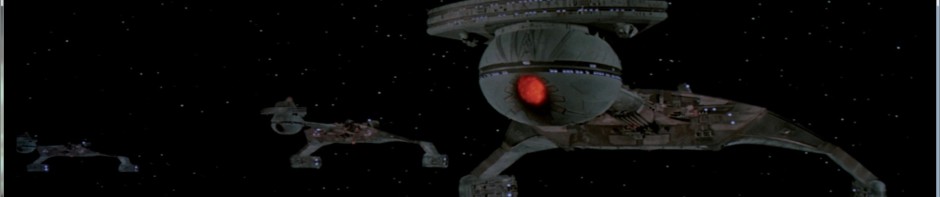
Movie Review: Prometheus

I’ve been putting this off (which seems to be becoming a bit of a theme for me), but here’s the review:

Visuals:  9

Audio:  7.5

Plot:  2

Characters:  4

Action:  8

Science (only applies to sci-fi films, not counted in overall): 2

Overall:  5.5-6

Synopsis:  Much better than Resurrection, and if you prepare yourself for just a simple action film with some neat special effects, it’s worth the money to see it in a theater.  If you go in expecting a smash epic hit, you’ll be very disappointed.

Detailed Review (SPOILERS):

This film loses strength progressively as it gets longer in the telling.

They had a decent primary plotline, centered around the couple who were doing the historical research and were the reason for the expedition, their interaction with the Weyland company and some interesting plot developments behind that.

Then they arrive on-planet (which turns out NOT to be LV-426 as everyone was assuming – if you watch closely, early in the film the nav charts specifically designate the world to be a different marker), and movie-style things go to shit rapidly.

Science score got a 2 for the primary reason that the whole thing kept banging around about them tracking down our makers – the “space jockey” from Alien – who supposedly designed us.  As it turns out, they *are* us, we’re some kind of genetic descendant of them.  Anyone with a lick of knowledge will recognize that this is simply not possible, since humans didn’t just magically spring fully-formed onto the earth.  The precursor scene to the whole film seems to present the space-jockeys as seeding the earth from its barren state into the life-bearing world we have today.  So somehow over billions of years the genetic code for humans makes its way through the lineage of or molecular-biological history and reconstructs itself to be for all intents and purposes identical with the jockeys again?  Flatly, no.  Granted, I let this garbage slide because we’re already talking about the “Alien” universe, where an embryo can be planted, grow to the size of an artichoke in under 24 hours, pop out of its host (never mind the human not noticing the presence of something that big compressing his/her internal organs, never mind the immune system of the host going berzerk over the presence of this foreign body), and within another 24 hours become seven or eight feet tall, probably 100 kilos or more, strong as an ox, etc.  Oh yeah, and that second growth spurt?  Doing that without anything to eat.  Chemically such a creature would have to be (a) mostly inflatable, and (b) would immolate itself processing the largely exothermic reactions necessary to build its body up so fast.  We already know those things don’t dig fire so much, but if they survive their own growth, they should be made of freaking asbestos.

But back to the point – science score was abysmal.  This film was like a big advert for the Intelligent Design crowd, except instead of a god doing it, it was us.

Ridley Scott seems to just not know where to channel his alien-fu in this film.   He’s a visuals specialist, and he was trying to juggle a Stephen King-style epic plotline.  He put in tons of creepy-spooky angles, tried to chase them all, and they ended up tripping all over each other.  I can see he was trying to tie them all together towards the end to close the loops, but it turns out that he can’t write more than one plot dimension at a time.  How did this guy pump out Bladerunner?  I’ll tell you how:  he had Phillip K. Dick’s novel to start, and he dumbed that down to make a screenplay.  How did this guy pump out Alien?  Because that was just a haunted house in space, with one malign force and a vignette of evil-corporation-android.  Visuals and atmosphere saved his bacon in the first film, and same for the second.  Visuals made Prometheus tolerable, and to some degree even enjoyable.  But if plot and cool story is your hook, forget it.

Now before I beat the shit out of this film, I have to give it kudos for what it did right:  atmosphere and visuals.  Ridley Scott knows how to make a pretty picture.  He’s also good with atmosphere.  For these reasons alone, I think you’ll be pleased to see this film on a big screen.

But again, on plot, this film fails miserably.  Allow me to explain why Ridley Scott should never be trusted to write a plotline:

(a) This expedition has been traveling for over two years to get to their destination.  Yet within HOURS, if not minutes, of setting down on the surface, they’re popping out to go investigate the structure(s) they find.  With only six hours of daylight remaining.  And a massive sandstorm inbound, which, if they’re driving an advanced expeditionary vehicle, they’d have seeded weather satellites to keep them updated on exactly that sort of thing.  Not to mention they’d have spent time in orbit surveying the surface and looking for their landing site.  Sorry, no.  Expeditions take their time, take gear along, etc. etc. etc.  Maybe some of that got dropped on editing, don’t know.  The end result made me feel like I was watching a trillion-dollar version of “Blair Witch.”

(b)  Near the start we find out about the space jockeys, having something of an industrial accident – we are shown a recording of several of them running into a chamber, the last member of that crowd doesn’t quite make it and falls to have his head severed by what appears to be a door that seals off a stasis chamber – one that you see in the trailers with the big statue of a human head – and that stasis chamber perfectly preserves the head inside the creature’s suit.  Team decides to take this back to the ship to study.  There are no other exits to that room.  Yet the two or three runners that actually made it into the chamber aren’t there.  Huh?  Where’d they go?  Meanwhile, the canisters all over the floor are leaking black goop, which some mealworms in the ground (I won’t ask what they were eating or where they came from) get engulfed by goop.  Goop will later turn out to be highly mutagenic – and spawn our first monsters (okay, that’s within bounds for suspension of disbelief).

(c) A couple of the team get lost inside the complex while the rest return to the ship (they leave to deal with (b) above, and because big storm is incoming) to ride out the storm mentioned above, the two are told to wait till morning.  Okay, fair enough – there should be nothing threatening there.  While waiting, the captain says the drones mapping the place pinged a life form, but then the ping vanishes.  It never comes back.  For the whole movie.  The two guys of course fall victim to some serious trouble courtesy of the mutated worms mentioned previously, but that isn’t what they were warned about.  This trouble is also something easily avoided, but much like teenagers in a slasher film, they think it’s smart to approach what amounts to a cobra sitting up and threatening them.

(d)  These same two guys previously stumbled across a large pile of space-jockey bodies, which have “exploded from the inside”, there’s lots of signs of violent demise there in that pile.  We already know that the subjects running this place had to evacuate because something got out of hand here, apparently that something got out of hand all over these individuals whose bodies are laying here.  We are never told what or how things went south for this rather large number of jockeys, and there’s no further attention paid to them.  Since the disaster was approximately 2,000 years ago, it is assumed that whatever happened is past.

(e)  One of the head researchers gets infected with something, actually SEES a worm crawling across his own eye in the mirror (you catch this in the trailer), and in spite of not feeling entirely well, decides not to tell anyone about it and amble merrily along with the mission.  Did I mention they took their helmets off inside the structure, and the most logical place for him to have been infected was breathing that air?  So it would behoove him to notify the gang, right?  Nothing.  Even ends up having sex with his girlfriend (with predictable results), and shortly after collapsing while helping the crowd explore the structure, decides that rather than stay outside the ship waiting for the illness to resolve itself or receive treatment remotely, he invites someone to torch him.  Literally.  This results in a serious “huh?” moment for the audience, and even Charlize Theron stands there, obviously thinking the same thing with a giant “What the fuck is this doing in the script here?” look on her face.  Granted, he deserved it, because the not-telling-anyone is equivalent to being infected with ebola and french-kissing as many people as possible in the hopes that everyone will join him in his miserable and fatal illness.

(f)  Before the torching above, the team returns to the scene where the two deadsters who got left behind yesterday  in (b) are.  They find bodies, of course.  One of whom is quite dead and something obviously alive and pissed off shoots out of his mouth, the other also quite dead with an acid-eaten face and his helmet melted in.  This is where boyfriend collapses, and the team once again has to return to the ship because he’s in bad shape.  Torching ensues.  So, they leave the bodies there for now, retrieve them on the next trip out.  Except!  Overnight, acid-eaten-face guy apparently walked home and parks collapsed up like a spider outside the ship’s garage door (it’s where they keep the vehicles, it’s basically a garage).  They see his camera feed the next morning, “Hey, he’s right outside!” and open up to see him laying on the ground there.  Well, surprise, he’s grown into some kind of malevolent zombie because of his exposure to the goop and tries to kill as many crewmembers as he can until he gets run over and squished by one of the vehicles in the garage.  No indication of what happened, they didn’t bother to inspect the body and find out how this supposedly dead guy got warped out this way.  Basically a big WTF there.

(g) Zombie-man’s friend was killed by a worm in a way very similar to how you’ll see a remaining live space-jockey get impregnated (which will later spawn what we might see as a precursor to the “Alien” we are familiar with).  Why killed?  Why isn’t he unconscious and spawning something vicious, evil, and ultimately destructive in the same manner we were told the dead jockeys were killed?  Yet his thread in the plot just ends there, abruptly.

(h) Somewhere along the line, the Captain figures out that this whole place is a big weapons factory, not the jockey’s homeworld, and stuff here was too dangerous to keep close to home.  He monologues this to get the point across to the audience.  Kudos to him for figuring it out, but then this shatters the whole premise on which the expedition was sent in the first place:  on no less than seven separate ancient civilizations’ records there is a map to this weapons installation, with people worshipping big giant people in the pictures.  We apparently think it’s a map to “go and find them.”  Well, duh.  It’s obviously not a “don’t ever go here” sign.  But it’s a map to a weapons factory, and given that the highly-mutagenic kill-goo is in a stasis chamber with a giant statue of a human head in it, it seems the kill-goo was being designed to kill us or turn us into killer zombies.  Or hosts for aliens.  Or some goddamn thing.  What?  If the giants were here, 35,000 years ago, and talking to people and telling us how to find this star system in order to find lots of nasty stuff that’ll kill us, why weren’t they just killing us then?  Huh?  Major plot-quake there.

(i)  Girlfriend mentioned above, who happens to be the main character, got impregnated (of course she’s supposed to be barren, so it’s a big surprise) by infected boyfriend, and to use the words of the script, it’s “not your traditional fetus.”  The predictable “let’s freeze you and take you home where we will have people who can get that out of you” conflict ensues, she fights her way free of the two crewmembers who are supposed to prep her and freeze her (we never hear from them again, apparently their ability to fanatically follow orders is prized, since she doesn’t bother to talk her way into having them help her).  After making her way to an auto-doc chamber, she has what amounts to an emergency caesarian done, yanking a squid-like alien out of her and stapling her gut shut.  Now I’m not going to complain about 22nd-century medical technology, but no one goes running around, jumping, fighting, blah blah blah with a large gut incision held together by staples.  Not for more than about sixty seconds, that is, which would be about long enough for a few of the staples to tear free and the subject to bleed out.  This could have been handled much better.

(j) So girlfriend staggers out of the operating booth and discovers that – surprise!  Old man Weyland came along for the ride, because he’s hoping that if we find live space jockeys, their knowledge of biology should be pretty freaking advanced, and they may know how to extend his life, maybe even grant him some form of biological immortality.  Okay, that makes sense from a motivational standpoint.  Yet here we are with people getting violently killed all over the place, and the old coot thinks its a good idea for him, his pet android, and a couple of security guards to go find the control center of the place and wake up the one surviving space-jockey whose cryo-stasis pod hasn’t malfunctioned yet.  Apparently he thinks the one guy that survived – who might very well be the janitor – will have the knowledge he’s after, and he’s in a big enough rush that he won’t accept sending someone in there remotely.  Which seems an awfully contradictory set of conditions, given the buckets of death being tossed around and that they’ve just experienced a zombie attack downstairs.  Still, Weyland is one cool customer for just saying “Hey, fuck that, I’m busy, let’s go talk to some space jockey.”

(k)  Girlfriend staggers her way along with Weyland, after having basically been told that she was intentionally going to have been stored to transport her alien baby back to earth, that Weyland doesn’t really care about her or her goals, blah blah blah.  She knows the jockeys want to kill us (courtesy of the Captain’s monologue clarifying matters for her), and although she insists on this with Weyland, he isn’t listening.  Okay, fair enough, Cassandra complex, etc.  They wake jockey up, jockey goes berzerk and kills everyone while she makes a break for it (lots of gut-busting gymnastics ensue, which should have killed her but didn’t).  Turns out the space jockeys have a ship, it was loaded with kill-goo, and it was on its way to being launched to depopulate our earth when the accident happened two thousand years past – and we’ve come along and located precisely this particular installation and woke up the fanatically devoted pilot who decides to carry out his mission.  That’s a major stretch in the world of suspension of disbelief.

(l)  Boom, ship gets stopped, Prometheus blows up, girifriend is the only one left alive (David the Android, decapitated, doesn’t count) and she makes her way to an escape capsule jettisoned by the Prometheus to restock her air and see if she can’t wait out some time, I guess.  On board, she discovers her aborted alien fetus is locked in the med bay and is now about the size of a young giraffe.  I didn’t bother to ask the projectionist to pause the film and explain what it ate or the thermodynamics of such growth, it was a monster, fine, I used to watch Gamera films and accept a giant fire-breathing tusked turtle when I was eight.  But jeez, this is a Ridley Scott film.  Can’t we have something that could potentially be related to the real world?

(m)  Space jockey decides he’s gonna kill every last human on this planet for some reason – they must really hate us, seeing as his mission’s pretty much over and he still wants to kill a human – comes after her in the pod, whereupon she pops the door to the medbay and baby squiddy (did I mention it was the size of a pretty hefty wildebeest?) gets cuddly with space jockey.  Girlfriend then piles a bag full of air cans and escapes the pod while squiddy impregnates jockey orally.  This is a tie-off of a quality I’d expect from a Friday the 13th part ninety-seven, not the guy who came up with Alien and Bladerunner.

(n)  So, what does girlfriend do now?  David the Android tells her he can pretty much pilot one of these alien ships, having observed space jockey doing so, and he can drive one for her – there are more installations here, they’ve only looked into one, and it stands to reason that each is equipped with its own ship.  Okay, fair enough.  Does she decide to go home?  Ohhhhh, no.  She wants to go on and find the space jockey homeworld and ask why they want to kill us, or meet the people who made us, or whatever.  So she flies off into the sunset.  Literally.

(o)  We get a final scene of space jockey getting ripped open and a roughly dog-sized alien popping out complete with umbilicus and placenta (did I mention that space jockey was a guy?  what’s a placenta doing in there?) and taking a few breaths.  End of film.  This isn’t LV-426, so that’s just for the satisfaction of watching jockey die, I guess.  Note that jockey isn’t even in his native ship, which is where Lambert, Dallas and Kane find the dead jockey (who had a much smaller hole popped out of his chest) in Alien.  So that ship and that jockey are either a different set, or this is (yet another) major hole in this plotline.  I’ll be gracious and assume it’s a different set.

_____

So, like I said, it seems like Ridley Scott just doesn’t know how to channel his alien-fu coherently – so suddenly you’ve got three or four different angles of interaction going on, he’s trying to be spooky-scary with each one, and they end up falling over each other.  If just one of them had been the venemous, insidious evil, with perhaps a vignette of the more banal human evil we all know and love, it probably would have been the blockbuster we were all hoping for.  But his story was too much for him.  Too much for me.

But all that said, it was fun to watch.  After about (c) I just decided “fuck the plot, let’s just see what happens, that ship is cool looking.”  If I had to liken the experience to something, I’d say it was similar to watching Episode 1 of the newer Star Wars trilogy.  I thought the story was shit, and Anakin should have been jettisoned from an airlock, but Darth Whatsisface had a double-bladed lightsaber, and that was cool shit.

UPDATE:  Because it was so damn funny, I’m linking Prometheus as Told Within A Role-Playing-Game
Posted in Movies | Tagged , , , | Leave a comment

Key Performance Indicators in IT – part 1

I was asked recently by a company as part of their first-round hiring process a question very similar to this:

How would you establish measurement of the departments under you in such a way that you would have an indication that they are operating well?  What would these things mean?  How would you go about setting them up?

Well, first off:  I was surprised.  Not at the nature of the question, but that I was being asked it at all.  It’s the first time in over 10 years that someone has broached the topic of Key Performance Indicators (notoriously known as KPIs in business-speak) and actually understood what they meant.  Most companies understand that there are metrics one can use to establish the overall health of a company or department – and that they are wildly different from department to department to company.

Some just don’t get it at all.  As an example, at the company I am in the process of leaving, our MD thinks that a KPI is a to-do list.  Yes, he’s that far away from knowing how to run a business.  Which might be one of the reasons why it went down… but that’s another story.

First, it deserves note – why do KPIs matter?  The whole point in measuring a KPI is to identify critical factors in your business or department and watch them with the intent of fixing them when they show times of trouble, or improving them to better your unit’s output.  Distilling this concept:  KPIs provide visibility into the heartbeat of the business unit.  Many people (myself included) don’t look at a spreadsheet and say “Oh, I see, got it” right off the bat (in my defense, it takes a few minutes 🙂 ).  But if you can show someone a graph with bars or lines on it?  Click.  They get it.  This is especially important for board members or executive meetings – not because they won’t “get” the excel sheet (most will, but some wont), but because they don’t have time to dick around pretending they care about the nitty-gritty details of who made what sale or which developer is pumping out the most code with fewest bugs.  They are being paid to handle a much broader picture, and wasting their time means wasting company money (and it also means probably pissing them off, which will result in first their asking for your excel slide to be removed from the deck, and later probably asking for you to follow your excel slide).

I’m going to hit up a few different sides of the KPI angle, aimed at different departments within IT – and will probably do an overview of one at a company-level as well, in what is to become my first series article here.  Before I begin though, it deserves a little definition of what a KPI really, truly is.

Let’s start by breaking down its name:  KPI, is Key Performance Indicator.

KEY:  the item, whatever it is, represents a key portion of your business.  Without it, things don’t work.  It’s like your car – if you don’t have the key, you’re screwed.  You can get by on three wheels, or no seats, or broken windows, for a little while and still get where you’re going.  But if you don’t have the key, you aren’t going anywhere (notwithstanding the smart-ass “hot-wiring” comment that will no doubt follow, stretching my metaphor too far).

PERFORMANCE:  performance represents accomplishment.  Miles per gallon for your car.  Consistent placement of a round from a pistol or rifle.  The oven produces good heat per unit of gas or electricity given to it.

INDICATOR:  a metric used to measure something.  An indicator light on the dashboard of your car, the CPU meter on some of your screens right now, the thermometer outside your window.  These are all examples of indicators.

So…when you put it all together, you get an indicator, a measuring stick, of the performance of an item that your department or business can’t succeed without.

There will only be a few items that are “Key” – not everything can be key, because when everything is critical, nothing is.  Same thing goes for problems and bugs and features (as some readers from past companies will remember me saying this), and it’s worth making an axiom out of.  In fact, I’m quite certain other people have said it already, but it bears being made into a T-Shirt:

WHEN EVERYTHING IS A CRITICAL EMERGENCY, THEN NOTHING IS.

Some time I’ll go over to Cafe Press and put some shirts together.

I’ve worked at two firms (it could count as three, but I went to work for one of them twice) where I came in the door to a fire-fighting culture that viewed every single issue as a critical make-or-break.  The situations were each different, but bore resemblance to one another in that they were each driven by some form of “Oh my god, we’ve got a bug, if the customer doesn’t get a fix by five pee-emm then the sky is going to rain menstrual blood all over us!!” and of course the development staff was tied up doing nothing but fix-fix-fix, and every fix for one customer was considered inconsequential or a nuisance to others, where later it would become yet another hellfire-and-brimstone case.

In their defense, it’s very easy to end up with a bad case of tunnel-vision when that happens.  As an outsider coming in, I could see very clearly that they weren’t prioritizing and identifying what was good for their product.  But inside?  They were so caught up in the day-to-day (and at least one person in each case had made a career out of creating the spaghetti solutions which added more fuel to the fear-mongering fire – which that person used as job security), they couldn’t see an end to the tunnel. Breaking out of that long enough to see how to fix it is hard.  Which is why the firefighting culture is often fatal for a company.

So KPIs are a very few things that actually are critical.  For example, if a company doesn’t sell anything and makes no money, it will die (because eventually investors are going to tell the company to go screw itself).  So revenue generation would be a good target to choose for a company KPI.

They’re also indicators.  As such, they must be measurable.  That’s not an option.  I repeat:  they must be measurable. If you can’t measure it, it’s not an indicator, and it’s out the window.

And they measure performance.  Performance can be tuned.  That’s also important – if you’re measuring something you have no control over, it’s not a KPI.  That doesn’t mean it isn’t worth measuring – many factors over which we have no control exert influence over our businesses.  It just means it’s not a KPI.

Let’s sum that up now:

A KPI is a measuring stick used to monitor one of a few critical aspects of the health of your business unit with the intent of proactively identifying problems or aiding in the improvement of your unit.

I’ll crank out another article on this in a day or five, I’ll hit up measurement of KPIs as they apply to a Tech Support department.  I’ll probably add a few items that it will have in common with other call-center type environments as well.

Update:  I forgot to mention something that KPIs are not:  immediate.  The time frame over which KPIs show change is not daily.  It is at best monthly – and more likely quarterly.  Most data used by KPIs is strategic – this is not a tactical tool.  You may observe a shift over a one-week span, but at the rate of weeks, such shifts are indistinguishable from normal noise.  If you see a shift that looks alarming, by all means pay close attention to the situation, but unless it repeats or worsens over coming weeks it should not be taken as an impactor of the KPI.

Use of a KPI should produce a trending line, which is what gives you something to bring action to.  Spikes and troughs in the data are to be expected, and can usually be explained by occurrences that have specific causes and durations (i.e., “Call wait time spiked there because we had two members of the team resign while three more were on holiday – so we were temporarily understaffed.”)

Update: part II can be found here

Posted in Business, IT, Work | Tagged , , | 2 Comments

Been Gone a While…

Apologies – current company is in a death-spiral under a fail-upwards culture in our UK office, and I’ve been pounding the pavement both looking for a new position as well as trying hard to get a business plan polished up (I’ve been working on it for umpteen years, but recent events have unfortunately caught me a little by surprise).

Hope to return here soon…

Posted in Uncategorized | Leave a comment

This is the reason…

…why many people, myself included, smile going out the door every morning, or smile when looking up at the stars.

Posted in Uncategorized | Leave a comment